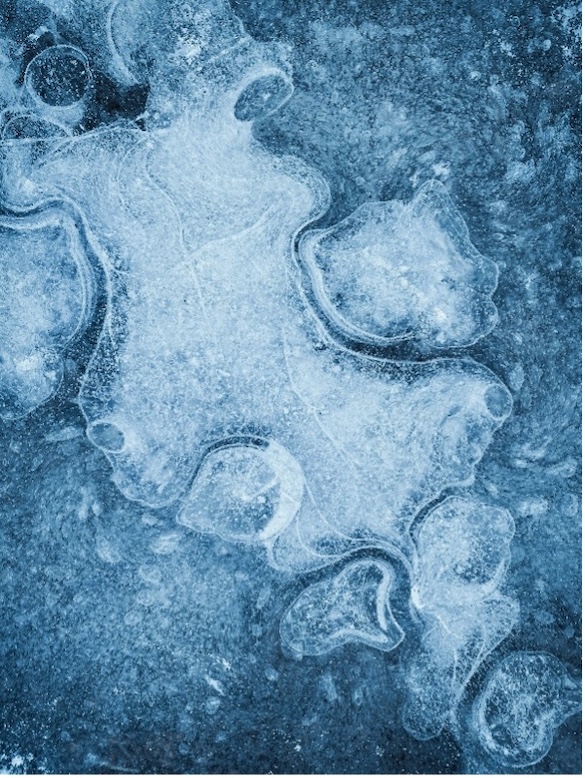
Photo by Eugene Golovesov on Unsplash
We have now crossed seven of the nine planetary boundaries, and current trends suggest we are moving even further beyond safe limits (Stockholm Resilience Centre, 2025). One of the many alarming consequences of climate change is the rapid warming of the Arctic. Rising temperatures are causing vast areas of permafrost to thaw — soil that has remained frozen for at least two consecutive years, with many formations dating back thousands of years to previous glacial periods.
Permafrost thaw is being driven by anthropogenic global warming (human activity). Over the past decade, soil temperatures in permafrost regions have risen by more than 2°C (Biskaborn et al., 2019). Warming has been especially severe in high-latitude and high-altitude regions where permafrost is most vulnerable to thawing. Current projections suggest that as much as 64% of global permafrost could have thawed by 2100 (Landrum & Holland, 2020).
Permafrost soils are known to support highly diverse microbial ecosystems. Research has highlighted the potential for pathogen emergence from cryosphere environments such as glaciers, ice patches, and frozen soils. For instance, studies have identified high concentrations of influenza A viral RNA in Siberian lake ice, with the potential for transmission through migratory birds (Zhang et al., 2020). Following thawing, microbial activity increases which can intensify greenhouse gas emissions.
One of the best-known examples of permafrost thawing revealing historic frozen pathogens is that of Bacillus anthracis. In 2016, an outbreak was reported in Siberia following exposure to infected carcasses that were previously frozen in permafrost. Thirty-six cases of human infection occurred; one person and over 2500 reindeer died after ingesting spores released following permafrost thawing (Popova et al., 2016). Concerningly, antibiotic resistant genes have been found in permafrost bacteria (Haan & Drown, 2020).
For thousands of years, Arctic permafrost has functioned as a natural freezer, preserving organic matter, microbes, and even infectious agents. Today, anthropogenic global warming is destabilising these frozen landscapes at an unprecedented rate. The chilling concern is that long-frozen pathogens could re-enter modern ecosystems with potentially fatal consequences.
References
Biskaborn, B. K., Smith, S. L., Noetzli, J., Matthes, H., Vieira, G., Streletskiy, D. A., … & Lantuit, H. (2019). Permafrost is warming at a global scale. Nature communications, 10(1), 264. https://doi.org/10.1038/s41467-018-08240-4
Haan, T. J., & Drown, D. M. (2021). Unearthing Antibiotic Resistance Associated with Disturbance-Induced Permafrost Thaw in Interior Alaska. Microorganisms, 9(1), 116. https://doi.org/10.3390/microorganisms9010116
Landrum, L., & Holland, M.M. (2020). Extremes become routine in an emerging new Arctic. Nat. Clim. Chang. 10, 1108–1115. https://doi.org/10.1038/s41558-020-0892-z
Popova A.Yu., Demina Yu.V., Ezhlova E.B., Kulichenko A.N., Ryazanova A.G., Maleev V.V., Ploskireva A.A., Dyatlov I.A., Timofeev V.S., Nechepurenko L.A., Khar’kov V.V. Outbreak of Anthrax in the Yamalo-Nenets Autonomous District in 2016, Epidemiological Peculiarities. Problems of Particularly Dangerous Infections. 2016;(4):42-46. https://doi.org/10.21055/0370-1069-2016-4-42-46
Stockholm Resilience Centre, Stockholm University. (2025). Planetary Health Check 2025: Seven of nine planetary boundaries now breached. https://www.stockholmresilience.org/news–events/general-news/2025-09-24-seven-of-nine-planetary-boundaries-now-breached.html Zhang G, Shoham D, Gilichinsky D, Davydov S, Castello JD, Rogers SO. (2020). Evidence of Influenza A Virus RNA in Siberian Lake Ice. Journal of Virology, 80: https://doi.org/10.1128/jvi.00986-06